
Our results highlight potential heritable behavioral responses of snakes to sound, clustered within genera. Our study illustrates the behavioral variability among different snake genera, and across sound frequencies, which contributes to our limited understanding of hearing and behavior in snakes. Leer más.





Recientemente desde el equipo de Paleoherpetología del IPHES-CERCA, en colaboración con científicos de la Universidad de Boston y de Pearl Harbor-Hickam, hemos publicado un nuevo artículo (“Herpetological remains from the Lower Magdalenian site of El Juyo (Cantabria, Spain): the challenge of reconstructing climate and landscape from poorly diverse assemblages”) sobre un conjunto de anfibios y reptiles cantábricos del Pleistoceno final provenientes del yacimiento arqueológico de El Juyo, en la revista científica Historical Biology. Leer más.
El Juyo és una cova situada a uns 8 km a l’oest de la ciutat de Santander, a Cantàbria, on s’han descobert importants restes arqueològiques de diferents èpoques, des de l’Edat Mitjana i l’Edat del Bronze al Paleolític superior, en què destaquen les troballes d’ocupacions de grups humans magdalenians del final del Plistocè superior. Llegir més.
Entrevista a Carlos Caballero Díaz, investigador predoctoral especializado en anfibios y técnico en la Asociación Herpetológica Española. Carlos es un investigador predoctoral de la Universidad Autónoma de Madrid y del Museo Nacional de Ciencias Naturales, donde se ha especializado en el estudio de la conectividad de los anfibios. Leer más.

Expanding the trade of tropical fruits in an increasingly globalized world increases the likelihood of unintentional importation of viable herpetofauna and their parasites from other countries and even continents, since the conditions for growing and transportation of fruits (humidity, temperature) can often be tolerated by exotic amphibians and reptiles. Leer más.
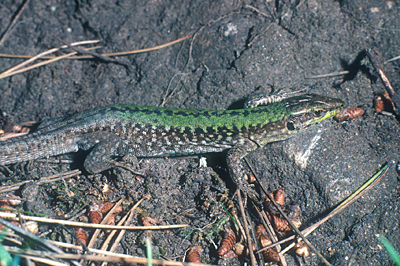
We found that the sequenced specimen from Alborán, clusters with individuals of the S. fasciatus clade, instead of S. mauritanicus. Hence, this study does not support the proposed nomenclature change, neither the species nor the island’s conservation status based solely on S. fasciatus from Alborán. Leer más.


