
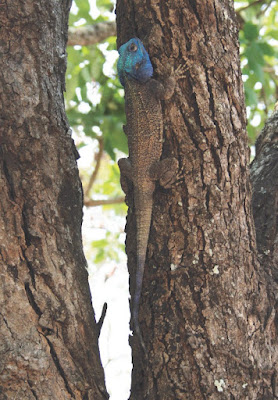
Recent integrative taxonomic studies of the agamid genus Acanthocercus Fitzinger, 1843 have shown that Angola harbors three different taxa, all within the Acanthocercus atricollis (Smith, 1849) species complex—A. cyanocephalus (Falk, 1925) in the northeastern parts of the country, A. margaritae Wagner et al. 2021 in the southern regions, and an unnamed species in the central and northwestern parts of Angola. Leer más.





Brachytarsophrys qiannanensis sp. nov., a new species of the short-legged toad genus is here described from southern Guizhou Province, China. Diagnostic characters of the new species are illustrated and comparisons with its congeners are provided. Leer más.

Emys orbicularis is a semi-aquatic turtle with great longevity being able to reach 50 years. In this study, we estimated the growth rates (in carapace length and body mass) in a population of E. orbicularis from the northeastern Iberian Peninsula over a period of 23 years. Leer más.
The slow-worm lizards (Anguis) comprise five species occurring throughout most of the Western Palearctic. Although these species are relatively uniform morphologically – with the exception of A. cephallonica, which exhibits a quite unique morphology – they are genetically deeply divergent. Leer más.
Multiple paternity is widespread in nature and despite costs, it has many associated benefits like increased genetic diversity and fertilization success. It has been described in many viviparous systems, suggesting the existence of some fitness advantages counteracting the inherent costs of viviparity, such as fecundity reduction and high parental investment. Leer más.


