When: Thursday 19 September 2019. Where: School of Anthropology and Conservation, Marlowe Building, University of Kent, Canterbury CT2 7NR. Leer más.





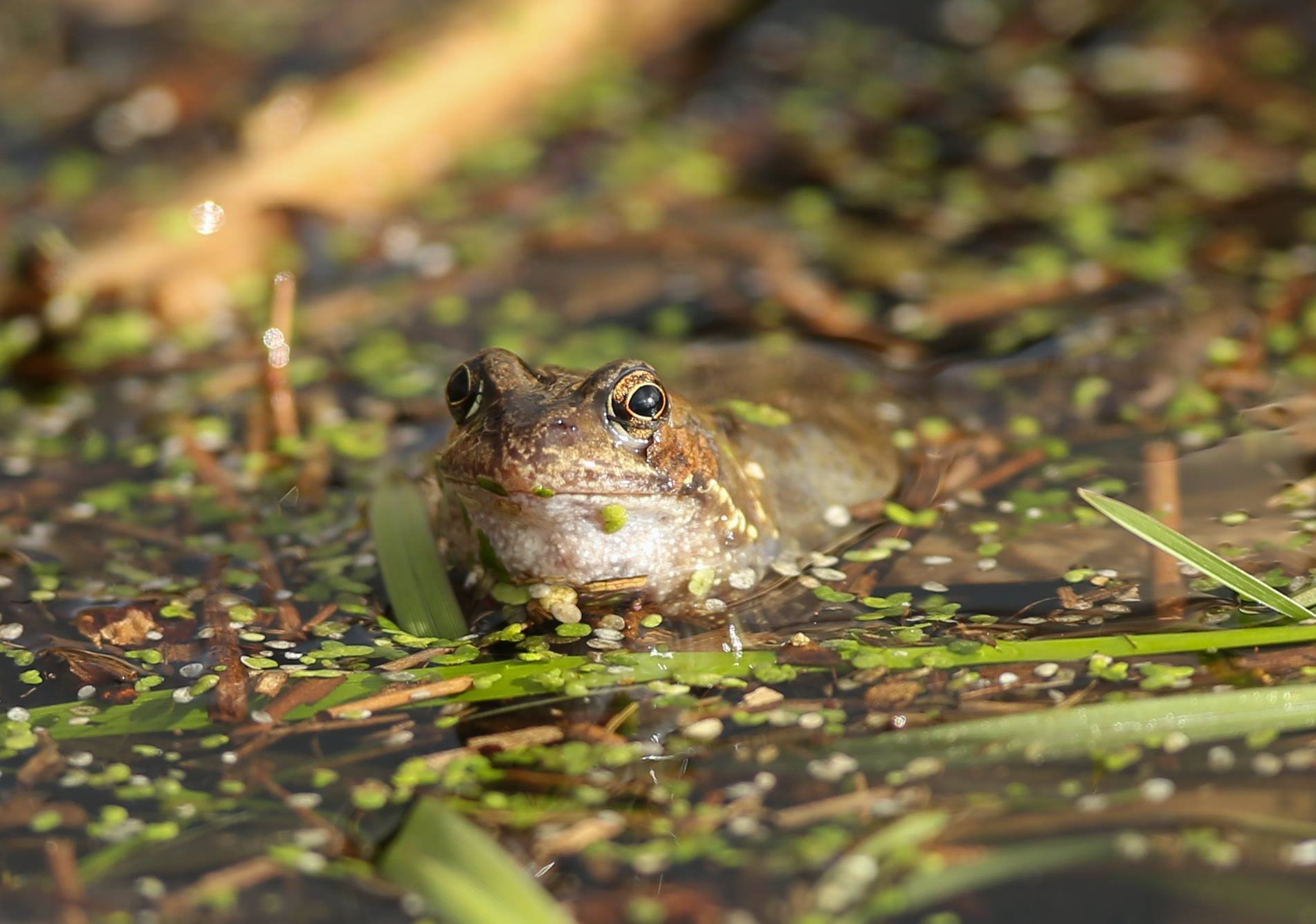
Climate change has already increased the spread and severity of a fatal disease caused by Ranavirus that infects common frogs (Rana temporaria) in the UK, according to research led by ZSL’s Institute of Zoology, UCL and Queen Mary University of London published today in Global Change Biology (10 May 2019). Historic trends in mass-mortality events attributed to the disease were found to match the pattern of increased temperatures recorded over recent decades, with disease outbreaks predicted to become more severe, more widespread and occurring over a greater proportion of the year within the next few decades, if carbon emissions continue at their current rate. Leer más.
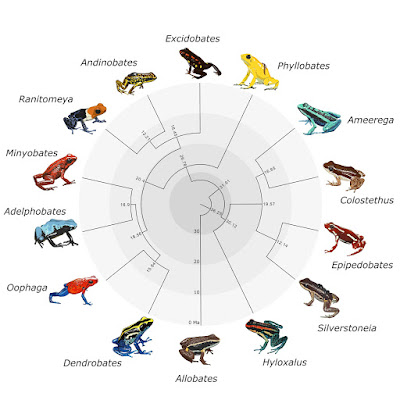
The evolutionary history of the Dendrobatidae, the charismatic Neotropical poison frog family, remains in flux, even after a half-century of intensive research. Understanding the evolutionary relationships between dendrobatid genera and the larger-order groups within Dendrobatidae is critical for making accurate assessments of all aspects of their biology and evolution. In this study, we provide the first phylogenomic reconstruction of Dendrobatidae with genome-wide nuclear markers known as ultraconserved elements. We performed sequence capture on 61 samples representing 33 species across 13 of the 16 dendrobatid genera, aiming for a broadly representative taxon sample. Leer más.
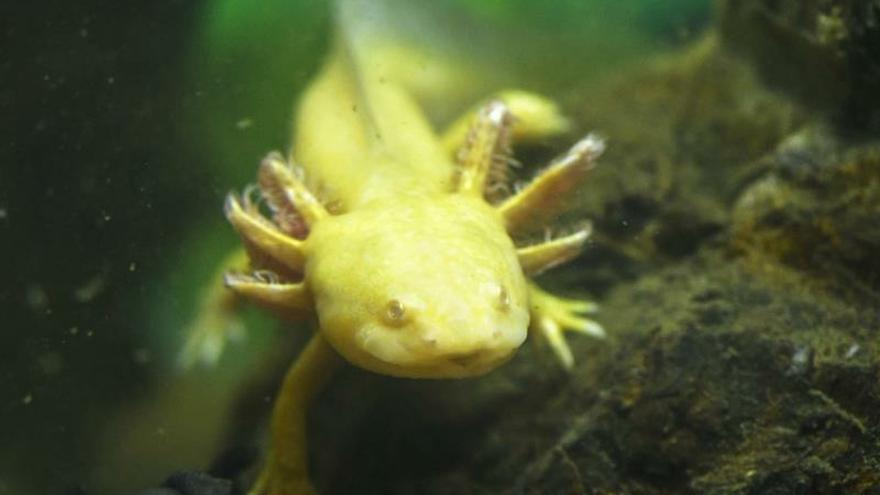
La familia de anfibios del Acuario Poema del Mar ha crecido tras el nacimiento de 25 axolotes mexicanos y 27 salamandras de kaiser, esta última especie endémica de Irán rara vez vista en Europa, debido a lo complicado que resulta reproducir las condiciones de su hábitat natural. Leer más.