Results indicate that wild populations from different subspecies have significantly different skin microbiome composition, as do wild and captive-bred groups from the same subspecies. Leer más.
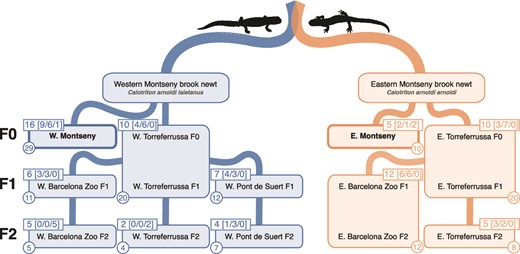






Results indicate that wild populations from different subspecies have significantly different skin microbiome composition, as do wild and captive-bred groups from the same subspecies. Leer más.
hese data, in addition to adding new populations to the overall Speleomantes dataset, allow us to compare aboveground and subterranean Speleomantes populations to identify potential variations in trophic niche breadth that have occurred in populations that have colonized subterranean environments. Leer más.

La capacidad de “tolerar” entornos desfavorables o condiciones ambientales extremas (como temperaturas muy altas, muy bajas o sequías), ha sido probablemente un factor clave en el éxito evolutivo de los anfibios. Leer más.
Our results also indicated that V. aspis and V. latastei occupy ecologically complementary areas, yet exhibit overlap within a sub-Mediterranean ecotone. Both species prefer habitats with high plant richness, suggesting an affinity for undisturbed environments offering greater prey density. Leer más.
The relevance of weather events is strongly different on each population and depends on environmental conditions of each population, especially lizard abundance itself, the island surface, geographical location and degree of exposure to weather events. Leer más.


